 +49 (0)
  Online-Shop geöffnet: Montag bis Sonntag
Gold overtakes the US dollar in currency reserves – a turning point in the global financial system?
- February 28, 2026
- manisha
- Recent News

 Online-Preisliste
 0
0


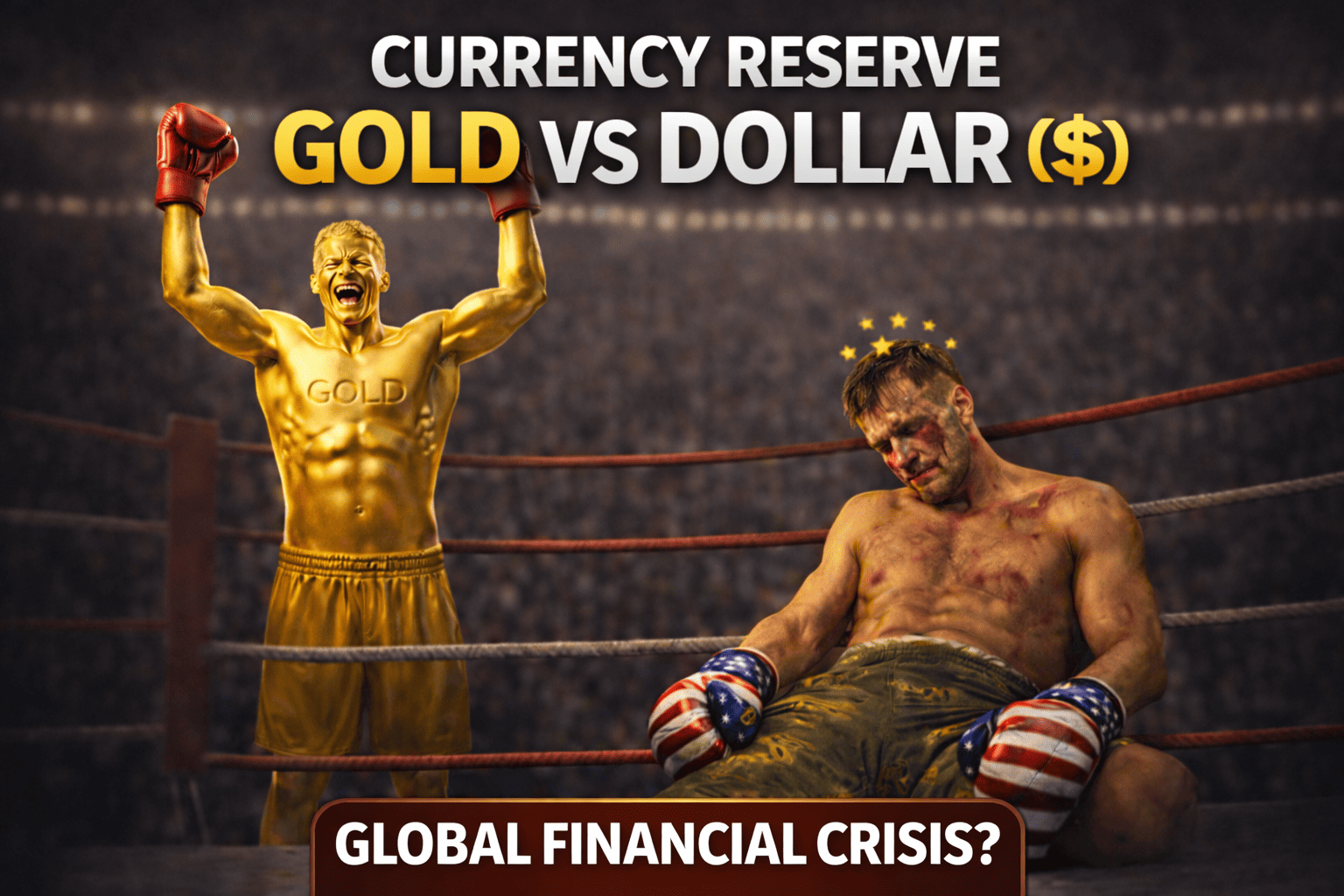
Gold overtakes the US dollar in currency reserves – a turning point in the global financial system?
For decades, the US dollar was the undisputed leading currency of the world. Central banks held the majority of their currency reserves in dollars, international commodities were traded in dollars, and the greenback acted as the central lubricant of global trade. But this picture is beginning to change. Gold has now overtaken the US dollar as the most important reserve component in the global currency reserves of many countries. This development is more than just a statistical shift—it could signal a structural change in the global financial system.
Why central banks are shifting their reserves
Central banks pursue several goals with their currency reserves: stability, liquidity, and security. For a long time, the US dollar fulfilled all these requirements. The US offered deep, liquid financial markets, political stability, and a strong economy. However, the environment has changed in recent years. High national debt, expansionary monetary policy, and recurring geopolitical tensions have fueled doubts about the long-term stability of the dollar system.
There is also a political factor: currency reserves are not only a financial instrument but also a geopolitical tool. Sanctions, asset freezes, and the increased use of financial instruments as political leverage have heightened awareness in many countries that foreign exchange reserves can be vulnerable . Gold, on the other hand, is a physical asset without counterparty risk. Those who hold gold are not dependent on the solvency or political stance of another state.
Gold as a “neutral” reserve
Gold possesses qualities that make it particularly attractive to central banks. It is scarce, physically present, and has been accepted as a store of value for millennia. Unlike paper money, gold cannot be arbitrarily increased in supply. This scarcity lends it a certain stability over long periods. Furthermore, gold is not tied to the economic policies of any single country. It is a politically neutral reserve that cannot be devalued by sanctions or monetary policy decisions.
Many central banks have steadily increased their gold reserves in recent years. These are not speculative purchases, but rather strategic reallocations. Gold is intended to serve as an anchor in the reserve portfolio – as insurance against extreme scenarios: currency crises, loss of confidence in paper money, or geopolitical escalations.
What does this mean for the role of the US dollar?
The fact that gold has overtaken the dollar in currency reserves does not automatically mean the "death" of the US dollar. The dollar remains a key trading and reserve currency. International financial markets, commodity prices, and a large part of global trade are still heavily dollar-based. Nevertheless, the shift in reserves signals a gradual erosion of the dollar's exclusive dominance .
Instead of a clear leading currency, a multipolar system is increasingly emerging. Alongside the dollar, other currencies and gold are gaining in importance. Central banks are diversifying their reserves to reduce dependencies. This trend reflects a changed risk awareness: They are no longer relying on a single pillar, but are building a more diversified foundation for their financial stability.
Impact on the gold price and private investors
The increasing importance of gold in currency reserves also has consequences for the gold market. When central banks structurally demand more gold, a lasting demand base is created that is independent of short-term market sentiment. This can support the gold price in the long term. Gold is thus used not only by private investors as a hedge, but also by government actors as a strategic reserve.
For private investors, this development is an important signal. When central banks – the "guardians of the monetary system" – favor gold as a hedge, it underscores gold's role as a long-term store of value. This doesn't mean that gold is risk-free or that its value is constantly rising. But it shows that gold continues to play a relevant role in the global financial system – not as a relic of the past, but as an active component of modern reserve policy.
A sign of a changing system
The shift in currency reserves towards gold can be seen as a symptom of deeper changes. The global economy is becoming more multipolar, geopolitical tensions are increasing, and confidence in stable framework conditions is no longer a given. In such an environment, assets that are independent of the political decisions of individual states are gaining in importance.
Gold fulfills precisely this role. It exists outside of national monetary systems and offers a form of stability in an increasingly fragmented world order. The fact that central banks now place a greater emphasis on gold than on the US dollar is therefore not merely a matter of numbers – it reflects a shift in security thinking within the international financial system.
The fact that gold has overtaken the US dollar in global currency reserves marks a symbolically important point in the development of the global financial system. While the US dollar remains significant, its special status is becoming less pronounced. Central banks are increasingly focusing on diversification and on gold as a politically neutral, physically backed store of value. For investors and observers, this development indicates that gold continues to play a central role in the modern financial world – not as a competitor to the monetary system, but as its silent, underlying safeguard.