 +49 (0)
  Online-Shop geöffnet: Montag bis Sonntag
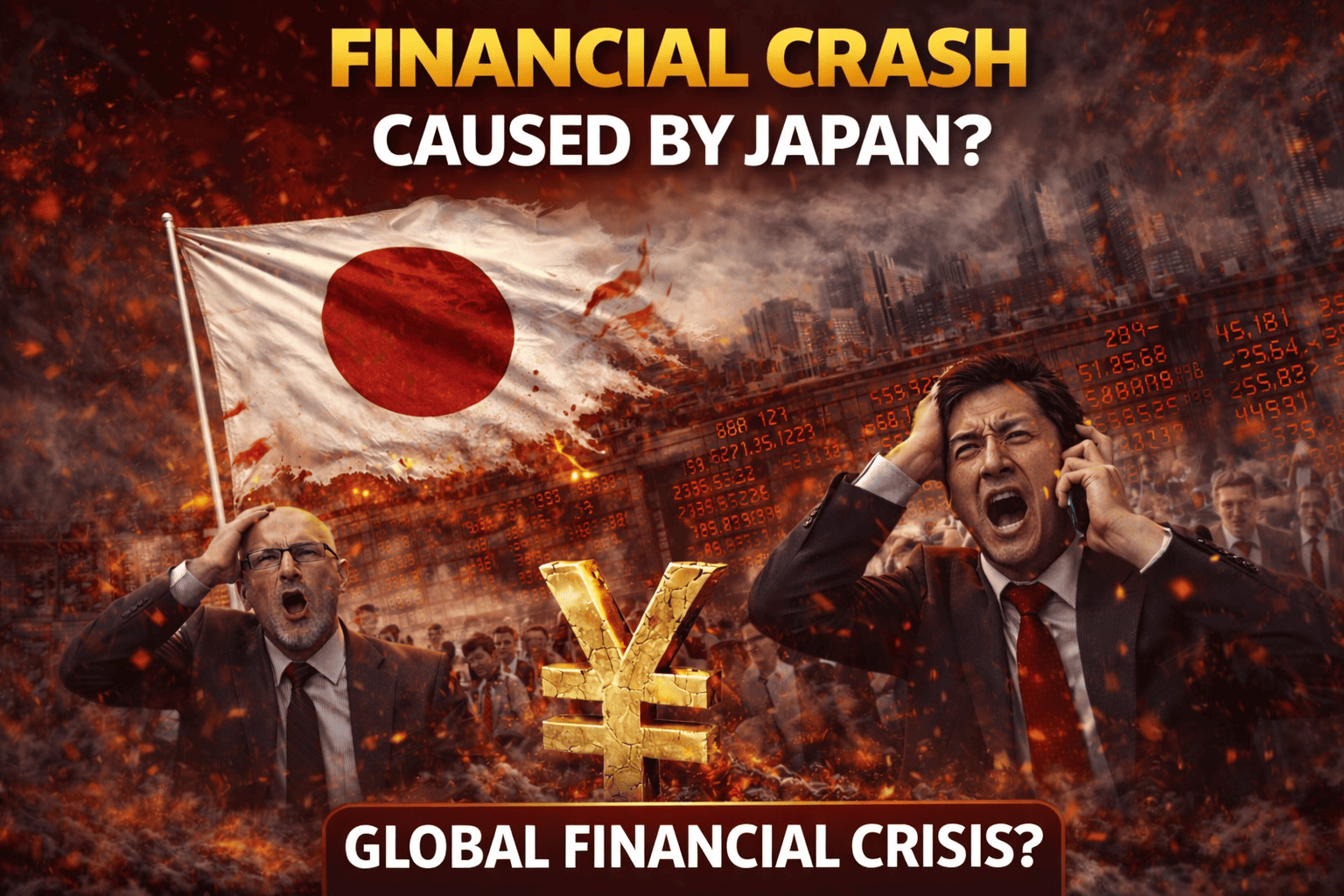
Is a global financial crash imminent, originating in Japan?
- February 27, 2026
- manisha
- Recent News

 Online-Preisliste
 0
0


Is a global financial crash imminent, originating in Japan?
When risks to the global economy are discussed, the focus is usually on the USA, China, or the Eurozone. However, one country is often underestimated: Japan . The world's third-largest economy plays a central role in the global financial system – and this could be a dangerous trigger for future market turbulence.
Japan's extreme monetary policy is a time bomb
For decades, Japan has struggled with weak growth, deflationary tendencies, and an aging population. In response, the Bank of Japan pursues one of the loosest monetary policies in the world. Low interest rates, massive bond purchases, and direct market interventions have allowed the Japanese government to borrow extremely cheaply .
The result: National debt well over 200 percent of gross domestic product. As long as interest rates remain low, this system appears stable. But as soon as confidence in this construct wanes or interest rates have to rise, the entire structure comes under pressure.
Japan as one of the largest creditors of the USA
Japanese institutions are among the largest holders of US Treasury bonds. This makes Japan closely intertwined with the American financial system. Should Japan be forced to reduce its holdings significantly—for example, to stabilize the yen or to finance its own budget problems—this would have an immediate impact on global capital markets.
Rising bond yields in the US would not only increase financing costs for the American government, but also put pressure on stock markets, real estate markets, and bank balance sheets worldwide. In a highly interconnected system, such shocks spread rapidly.
The yen and the danger of sudden market movements
Another critical factor is the Japanese yen. For many years, it served as a cheap source of financing for international investors. The principle: borrow money in yen and invest it in higher-yielding assets. This model only works as long as the yen remains weak and the markets are calm.
However, if the trend reverses – for example, due to political decisions, interest rate hikes, or a loss of confidence – these positions can be rapidly reversed. Such processes rarely proceed in an orderly fashion. In the past, they have often led to sudden stock market crashes, sharp currency fluctuations, and liquidity shortages.
Why a “Japan shock” would have global effects
In today's financial system, markets are more interconnected than ever before. Major stress in the Japanese financial sector would not remain isolated. Banks, funds, and insurers worldwide hold Japanese bonds or are indirectly affected through derivatives, currency positions, and interest rate products.
A loss of confidence could trigger a chain reaction: rising interest rates, falling prices, margin calls, fire sales. In such an environment, markets often overreact – and it is precisely these overreactions that can turn a regional crisis into a global financial crisis .
What does this mean for private investors?
For private investors, the question is less about whether a specific country will trigger the next crisis, but rather how resilient their own assets are to systemic shocks. Paper assets such as stocks, bonds, or funds depend heavily on the functioning of the financial system. If this system falters, these assets also come under pressure.
Tangible assets like gold and silver have been considered a hedge against currency devaluation, loss of confidence in the monetary system, and financial repression for centuries. Silver, in particular, plays a dual role today: as a store of value and as a strategically important industrial metal raw material for future technologies such as solar, electromobility, and electronics.
Conclusion: Japan as an underestimated factor in the crisis puzzle
Whether Japan will actually trigger a global financial crash is impossible to predict. But the structural risks are real: high debt, extreme monetary policy, strong ties with the US, and a fragile currency structure.
For investors, this means one thing above all: the illusion of stability in the financial system should be critically examined. A smart asset allocation considers not only return opportunities but also crisis scenarios. Those who think long-term should not rely solely on paper assets but should consider a sensible addition of real, physical assets.